On-Page SEO for Small Businesses: Complete Guide to Rank Higher
14 Sept 2026 9 min readSanket Jain
Learn practical on-page SEO for small businesses. Optimize title tags, content, headings, URLs, images and internal links to improve Google rankings and attract more customers.
On-Page SEO for Small Businesses: Complete Guide to Rank Higher on Google
On-page SEO is the work you do directly on your website pages so Google and visitors clearly understand what each page is about and why it should rank for relevant searches.
For small businesses in India, strong on-page SEO helps service pages, location pages and blog posts appear higher in Google Search results and attract more qualified organic traffic. It is one of the most controllable parts of SEO because you own the website and can make the changes yourself or with your developer.
This guide explains on-page SEO in practical terms. You will learn the main factors, a clear checklist, how to optimise titles, headings, content, URLs, images and internal links, and how to avoid common mistakes. Everything is written for real small-business websites — restaurants, clinics, travel agencies, salons, CA firms, local service businesses and online stores.
For the wider strategy, see our complete SEO guide for small businesses. Technical foundations are covered in the technical SEO guide. Keyword selection is explained in keyword research for small businesses. Local visibility also depends on local SEO and a well-optimised Google Business Profile.
What Is On-Page SEO?
On-page SEO (also called on-site SEO) refers to all the optimisations you make on individual web pages to improve their visibility in organic search results.
It includes:
Title tags and meta descriptions
Heading structure (H1, H2, H3)
Content quality and relevance to search intent
URL structure
Image optimisation
Internal linking
Keyword placement that feels natural
Basic page experience signals that affect how users interact with the page
On-page SEO helps Google understand the topic of each page and helps users decide whether the page answers their query.
=>>>> For SEO related enquiry contact <<<<=
Why On-Page SEO Matters for Small Businesses
Many small-business websites have useful services but weak on-page signals. Common problems include:
Vague or missing title tags
Content that does not match what people actually search for
Poor heading structure
Thin or duplicated pages
Missing or weak internal links
Unoptimised images that slow the page down
Fixing these issues improves clarity for both search engines and visitors. Better clarity usually leads to higher click-through rates from the search results and better engagement on the page, which supports rankings over time.
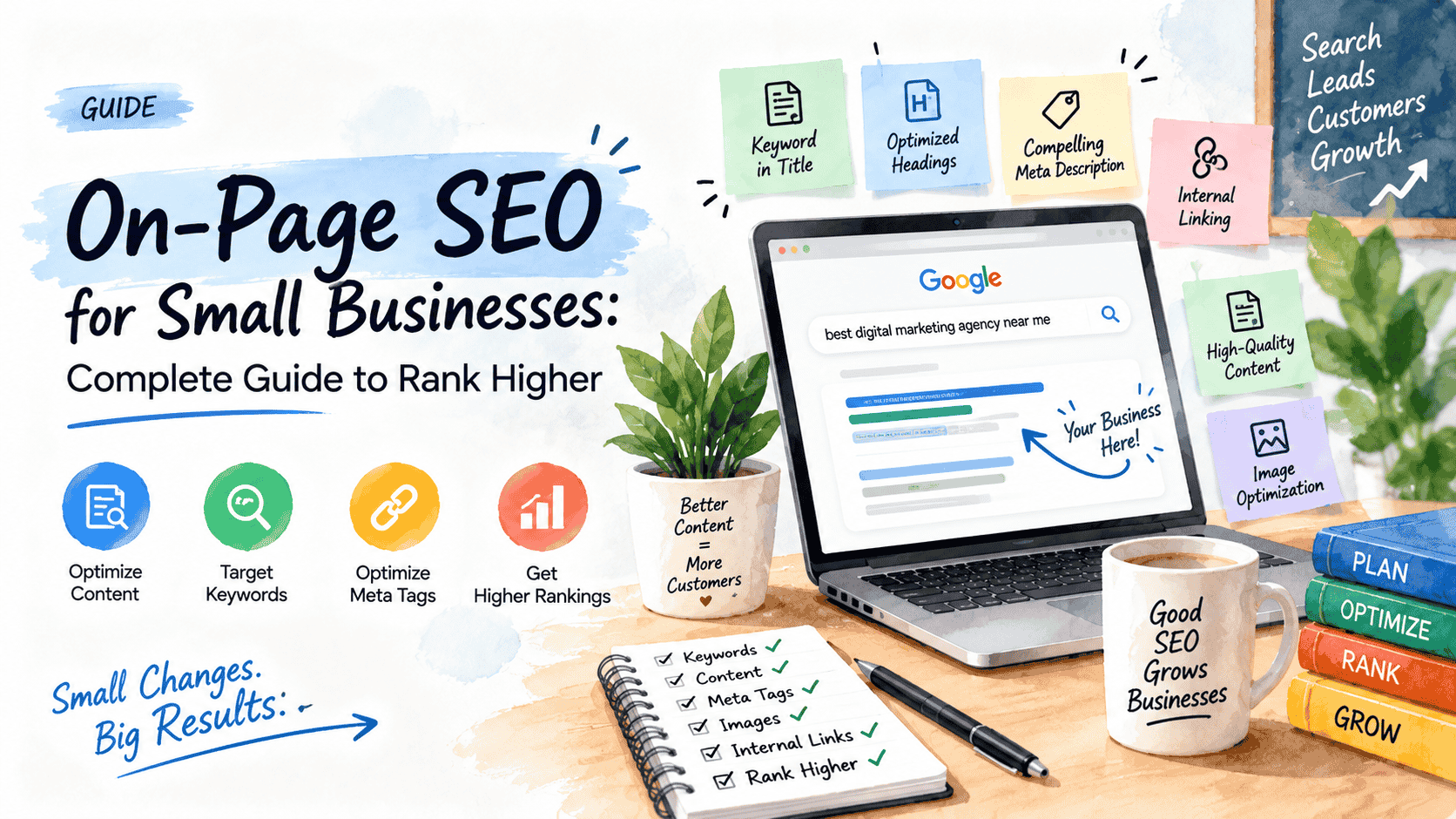
On-page SEO is especially valuable for small businesses because it does not require a large budget. Most improvements can be made with existing content and basic website access.
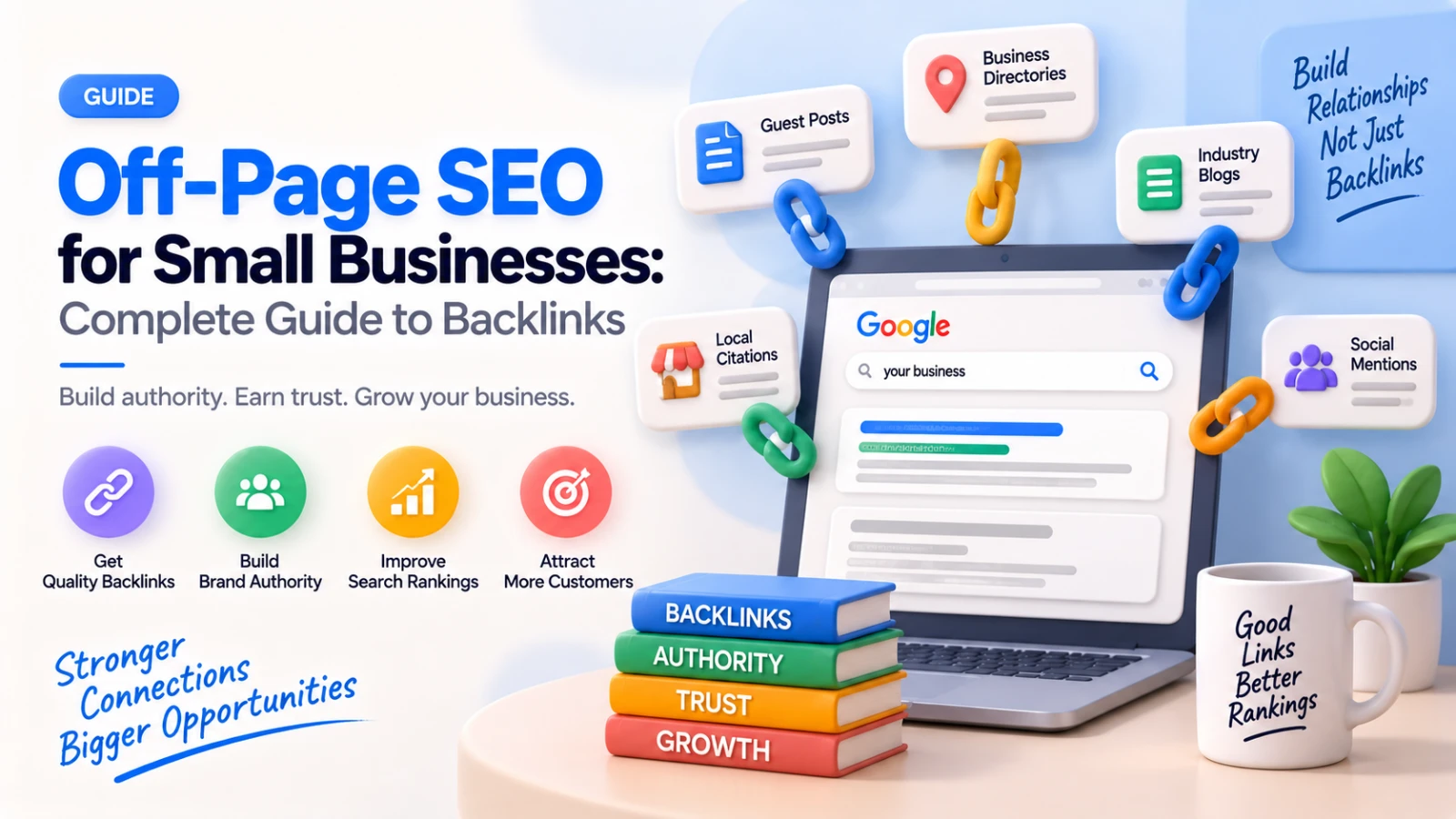
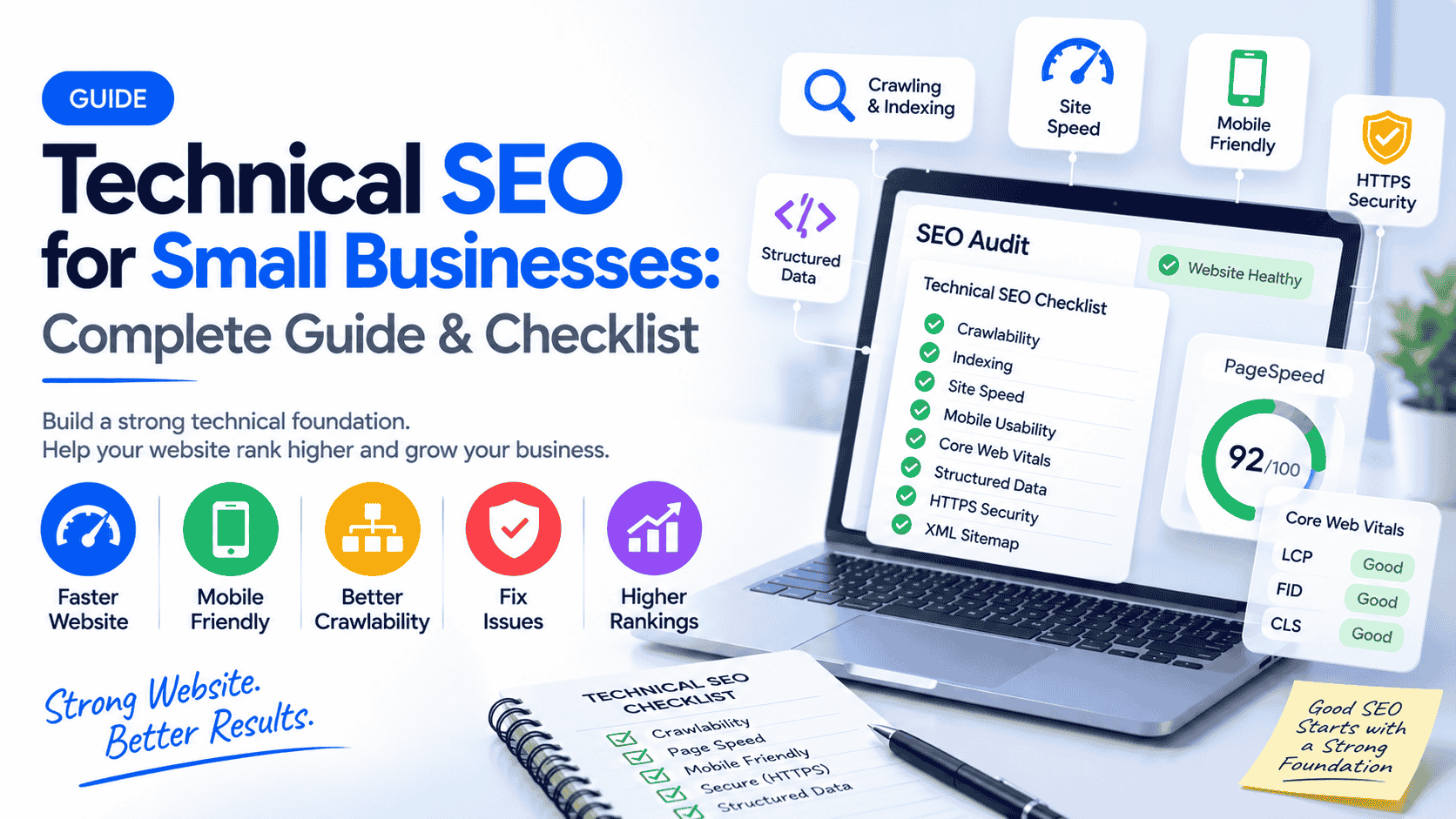
On-Page SEO vs Off-Page SEO vs Technical SEO
TypeMain FocusExamplesOn-Page SEOContent and elements on the pageTitles, headings, content, internal links, imagesTechnical SEOWebsite infrastructureCrawling, indexing, speed, HTTPS, structured dataOff-Page SEOSignals from other websitesBacklinks, mentions, brand references
All three work together. Strong on-page SEO makes the most of good technical health and any authority the site builds.
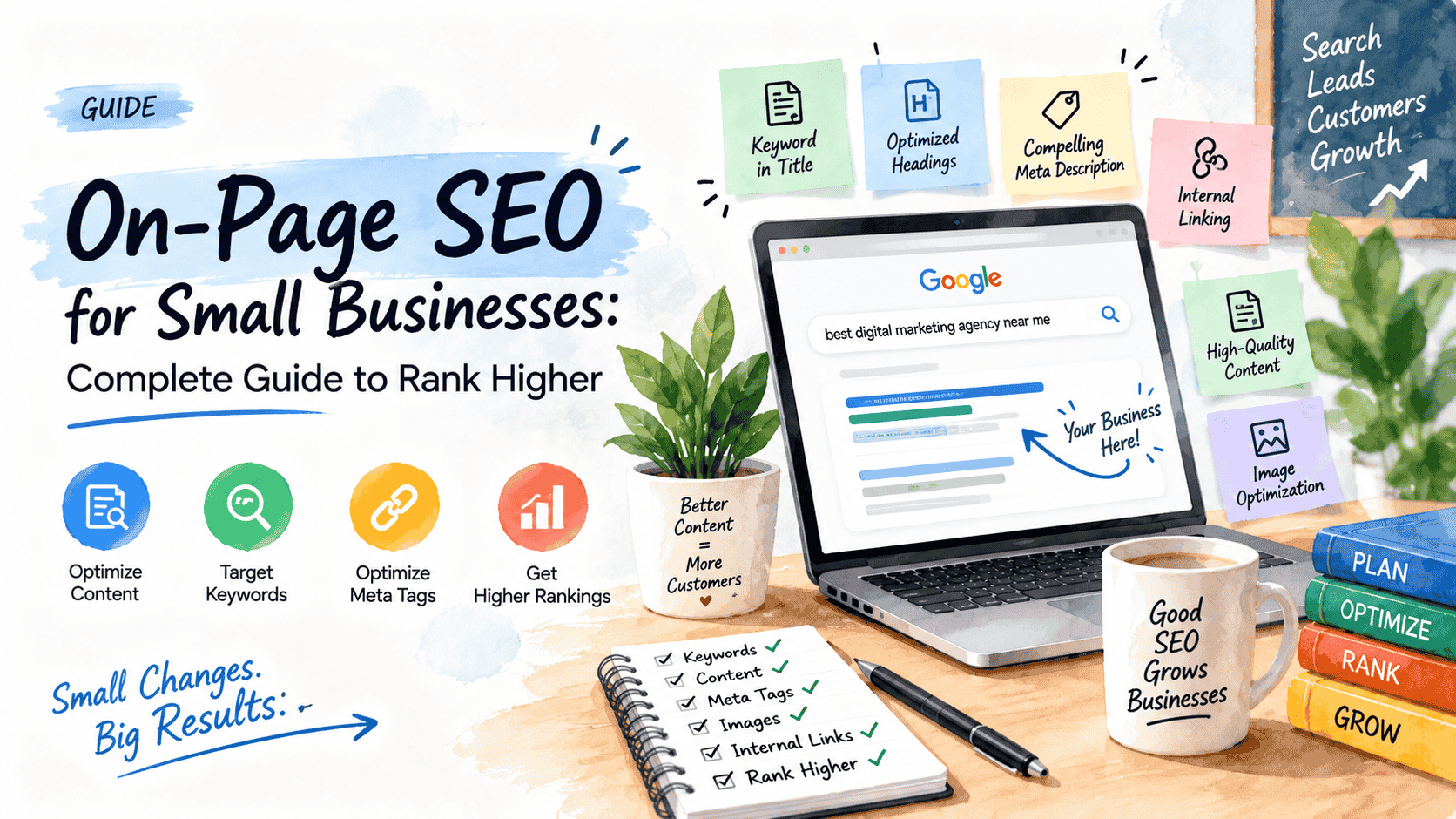
Complete On-Page SEO Checklist
Page Basics
One clear primary keyword or topic per page
Unique, descriptive title tag (roughly under 60 characters)
Compelling meta description that encourages clicks
Single H1 that matches the page topic
Logical H2 and H3 structure
Content
Content matches search intent
Helpful, original and sufficiently detailed
Natural use of related terms and questions
No thin or duplicate content
URLs & Links
Short, readable, keyword-relevant URLs
Descriptive internal links to related pages
Important pages are reachable from the main navigation or clear internal links
Images & Experience
Compressed images with descriptive file names
Meaningful alt text
Mobile-friendly layout
Reasonable page load speed
Extra Signals
Relevant schema markup where it adds value
Canonical tag pointing to the preferred URL
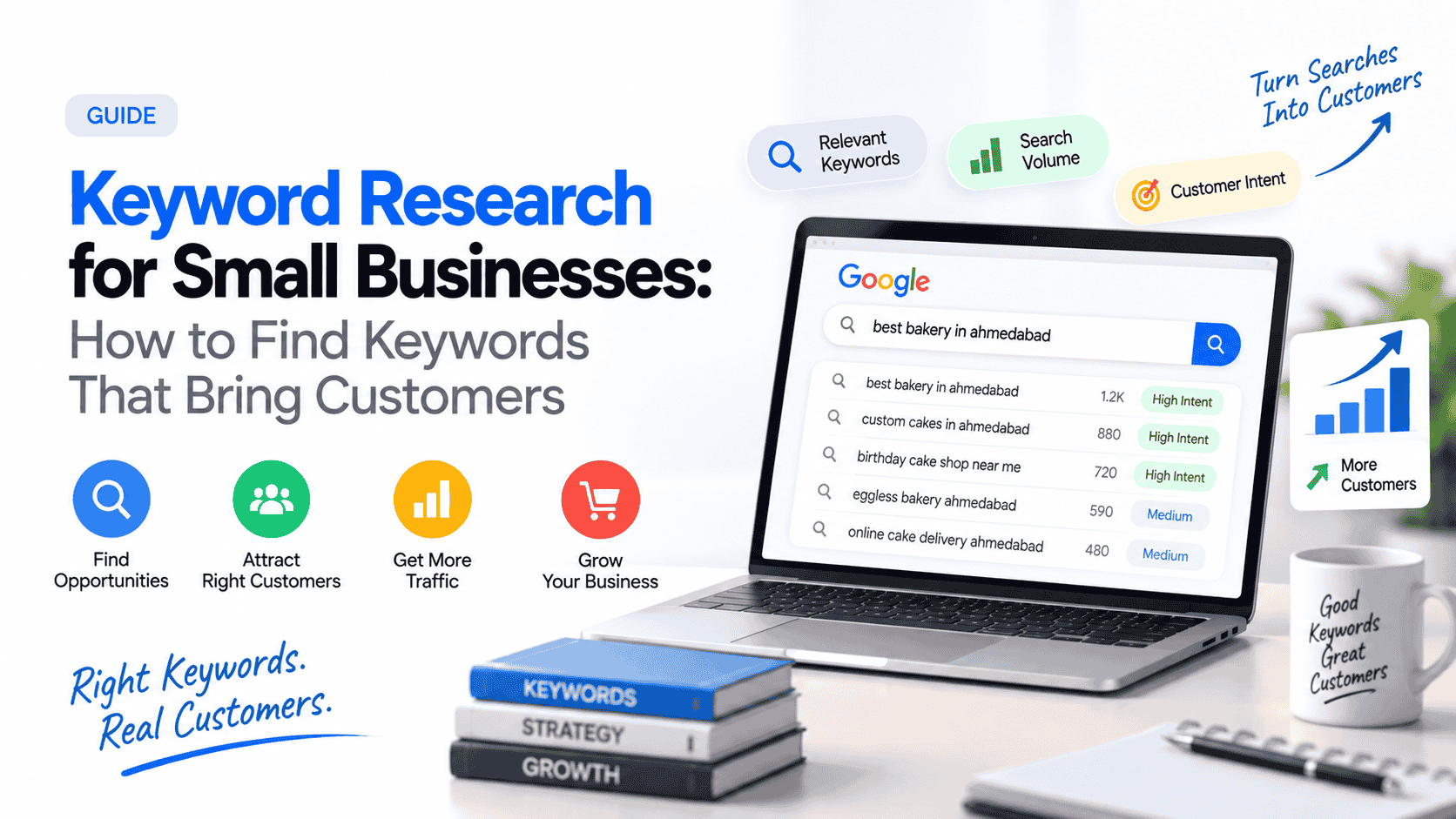
Keyword Research and Search Intent
Before optimising any page, know what the page should rank for and what the searcher wants.
Choose one primary topic or keyword for the page.
Identify a few closely related secondary terms and questions.
Confirm the search intent: informational, commercial, or transactional.
A service page for “website development company in Ahmedabad” needs different content from a blog post titled “how to choose a web developer”. Matching intent is more important than repeating the exact keyword.
How to Optimize Title Tags
The title tag is one of the strongest on-page signals and the main text people see in Google results.
Best practices:
Place the main topic near the beginning.
Keep it concise and readable (aim under 60 characters so it does not get cut off).
Make it accurate and benefit-oriented.
Include the location when it is relevant for local businesses.
Write a unique title for every important page.
Examples:
Poor: “Home” or “Welcome to Our Website”
Better: “Web Development Company in Ahmedabad | SanketBuilds”
Better: “Best Dental Clinic in Satellite, Ahmedabad – Book Appointment”
How to Write Better Meta Descriptions
Meta descriptions do not directly rank pages, but they strongly influence click-through rate.
Tips:
Summarise the page clearly in 150–160 characters.
Include a reason to click (benefit, location, offer, or clarity).
Match the search intent.
Write unique descriptions for key pages.
A good meta description acts like a short advertisement for the page in the search results.
H1, H2 and H3 Heading Optimization
Headings give structure to both users and search engines.
Use only one H1 per page. It should clearly state the main topic.
Use H2s for main sections and H3s for sub-points.
Include related terms naturally in headings where they fit.
Avoid generic headings such as “Overview” or “Services” when a more descriptive heading is possible.
Clear heading structure improves readability and helps Google understand the page hierarchy.
SEO-Friendly URL Structure
Good URLs are short, descriptive and stable.
Preferred style:
yoursite.com/web-development-ahmedabad
yoursite.com/dental-clinic-satellite
Avoid:
Long strings of numbers or parameters, unnecessary words, and frequent URL changes.
When you must change a URL, set up a proper 301 redirect from the old address.
Optimizing Website Content
Content is the core of on-page SEO.
What good content does:
Answers the searcher’s question or solves their problem
Covers the topic thoroughly enough for the intent
Uses clear language that matches how customers speak
Feels original and useful rather than rewritten from other sites
For service pages, explain what you offer, who it is for, the process, and why someone should choose you. For blog posts, answer the question completely and link to relevant service pages.
Keyword Placement Without Keyword Stuffing
Place your primary topic in the obvious places:
Title tag
H1
First paragraph (naturally)
At least one H2 where it fits
Image alt text when relevant
URL (when practical)
Then write the rest of the content for humans. Use synonyms, related phrases and natural variations. Google is good at understanding context. Forcing the same phrase repeatedly usually harms readability and can look manipulative.
Internal Linking Strategy
Internal links help Google discover pages and understand relationships between topics. They also guide visitors to important conversion pages.
Practical approach:
Link from blog posts to relevant service pages.
Link between related service pages.
Use descriptive anchor text (“local SEO guide” instead of “click here”).
Make sure important pages are not orphaned (left without any internal links).
A simple, logical internal linking structure is more effective than complicated systems.
Image SEO and Alt Text
Images affect both user experience and SEO.
Compress images so pages load faster.
Use descriptive file names (ahmedabad-web-design-team.jpg instead of IMG_4582.jpg).
Write accurate alt text that describes the image. Include a keyword only when it is genuinely relevant.
Ensure images are responsive on mobile.
Mobile-Friendly SEO and Page Experience
Most searches in India happen on mobile. Your pages must be easy to read and use on small screens.
Responsive design is essential.
Text should be readable without zooming.
Buttons and links should be easy to tap.
Page speed and Core Web Vitals influence both rankings and conversions.
Technical performance and on-page experience work together. A well-optimised page that loads slowly still loses visitors.
Avoiding Duplicate and Thin Content
Each important page should have a unique primary purpose and unique content.
Avoid copying product descriptions or service text across multiple pages.
Thin pages with little useful information rarely rank well. Expand them or consolidate them.
Use canonical tags when similar versions of a page must exist.
Schema Markup and Structured Data
Structured data helps search engines understand specific details (business information, FAQs, products, articles, etc.).
For small businesses, LocalBusiness schema, FAQ schema and Service or Product schema are often useful. Implement it correctly and test with Google’s Rich Results Test. Schema supports visibility but does not replace good content and titles.
Google Search Console for On-Page SEO
Search Console shows how your pages perform in search:
Which queries bring impressions and clicks
Average position and CTR
Pages that receive traffic
Indexing status of important URLs
Use this data to refine titles, meta descriptions and content on pages that already get impressions but low clicks, or pages that rank for related terms but not yet for your primary topics.
On-Page SEO Example for a Small Indian Business
Business: Local travel agency in Ahmedabad (example pattern similar to Adinath Travels style businesses)
Target page: Tour packages / travel agency service page
Primary topic: Travel agency in Ahmedabad / tour packages from Ahmedabad
On-page actions:
Title: “Travel Agency in Ahmedabad | Tour Packages & Custom Trips”
H1: Matches the main offer
Clear sections for popular packages, custom itineraries, why choose the agency, and contact information
Internal links to specific package pages or destination guides
Compressed images of destinations with descriptive alt text
Mobile-friendly layout and fast loading
LocalBusiness schema and accurate NAP details matching the Google Business Profile
The same principles apply to a dental clinic, salon, CA firm or web design company — match the page to a clear search intent and make every element support that intent.
Common On-Page SEO Mistakes
Multiple pages competing for the exact same keyword (cannibalisation)
Keyword stuffing in titles and content
Missing or duplicate title tags and meta descriptions
No clear H1 or confusing heading hierarchy
Thin service pages with only a few sentences
Ignoring search intent
Weak or missing internal links
Unoptimised images that slow the page
Changing URLs frequently without redirects
How Long Does On-Page SEO Take to Work?
Simple changes (titles, meta descriptions, headings) can influence click-through rates relatively quickly. Broader content improvements and ranking movements usually take weeks to a few months, depending on competition, site authority and how consistently you improve pages. On-page SEO is ongoing refinement, not a one-time task.
Ready to Improve Your On-Page SEO?
On-page SEO gives small businesses direct control over how their pages appear and perform in Google. The businesses that consistently match search intent, write clear titles and content, and maintain clean page structure tend to attract more organic traffic and enquiries over time.
If you want help auditing and improving the on-page SEO of your website, creating better service pages, or building a site that is properly optimised from the start, SanketBuilds can assist. We work with small businesses across India on practical SEO, website development and digital marketing focused on real results.
Need help optimising your pages for Google or improving your overall website SEO? Get in touch for a straightforward conversation about the highest-impact next steps for your business.
=>>>> For SEO related enquiry contact <<<<=
FAQs
What is on-page SEO?
On-page SEO is the optimisation of individual web pages — titles, content, headings, URLs, images and internal links — so they rank better and attract the right visitors.
How to do on-page SEO?
Start with clear keyword and intent research, then optimise the title, H1, content, headings, URL, images and internal links for each important page. Use the checklist in this guide.
What are the main on-page SEO factors?
Title tags, content relevance and quality, heading structure, search intent match, internal linking, URLs, image optimisation and page experience.
Why is on-page SEO important for small businesses?
It is one of the highest-control, lowest-cost ways to improve visibility and attract more qualified traffic from Google.
Is on-page SEO enough to rank on Google?
It is essential but not always sufficient on its own. Technical health, content usefulness and off-page signals also matter. Strong on-page SEO maximises the results of everything else.
Can a small business do on-page SEO themselves?
Yes. Most of the core work can be done with access to the website and basic tools such as Google Search Console.
How many keywords should I use on one page?
Focus on one primary topic and a small cluster of closely related terms. Write naturally rather than aiming for a specific number of repetitions.
Does on-page SEO still work in 2026?
Yes. Clear, relevant, well-structured pages that match search intent continue to perform well.